Provo Concrete Lifting
- Thousands of satisfied customers
- Local and family owned
- 15+ years in business
- Licensed and insured
- Always FREE Quotes
Licensed Warehouse Floor Leveling in Provo, UT
Uneven slabs, cracked joints, low spots, and rough forklift aisles can slow operations and create safety risks fast. We provide Warehouse Floor Leveling Provo UT property owners and facility managers can rely on for safer travel paths, better floor flatness, and longer-lasting concrete performance. From active distribution spaces to older industrial buildings, we correct settled slabs, birdbaths, trip hazards, and surface damage with the right repair method for the floor.
At Provo Concrete Lifting, we bring more than 15 years of concrete repair experience to warehouses across Provo, Utah County, and the surrounding service area. We use laser levels, floor profilers, industrial grinders, polyurethane foam injection rigs, and proven repair materials to minimize downtime and keep projects organized. As a local, family-owned, licensed, and insured company that has served thousands of customers, we understand the demands of warehouse traffic, racking layouts, and loading schedules. Contact us today for a free estimate for warehouse floor leveling.
Why Professional Warehouse Floor Leveling Protects Your Building, Budget, and Daily Operations
Most warehouse owners call when the floor starts affecting safety, workflow, or equipment performance. You may be dealing with standing water, forklift bounce, slab settlement, cracked joints, or uneven concrete that makes racking prep harder than it should be. Professional warehouse floor leveling is the smart choice because it addresses the cause of the problem, not just the visible symptom. When the work is planned correctly, you get a flatter, safer floor with less disruption and fewer repeat repairs.
Safer Floors With Less Risk to People, Products, and Equipment
Uneven concrete creates real hazards in a warehouse. Dips, heaved sections, joint separation, and spalled edges can catch pallet jacks, shake forklifts, and increase the chance of damaged inventory. We help reduce those risks by correcting dangerous transitions and trip points in line with OSHA warehouse safety standards and ADA trip hazard and slope guidelines where applicable.
That means you get more predictable travel lanes, better wheel contact, and fewer problem areas around staging zones, aisles, and loading paths. In active facilities, even a 1/2-inch elevation change can become a daily issue. Leveling targeted sections can make traffic flow smoother and reduce wear on tires, lift components, and carts.
Better Floor Quality That Supports Real Warehouse Demands
A warehouse floor has to do more than look better. It has to perform under repeated traffic, point loads, and daily cleaning. We use the right method for the slab condition, whether that means concrete lifting and slab jacking, diamond grinding for flatness correction, self leveling underlayment placement, or joint rebuilding and edge reconstruction.
We also match materials to the use of the space. That may include polymer modified cement topping, epoxy repair mortar, semi rigid epoxy joint filler, polyurea joint filler, or high strength concrete patching compound. The result is a floor that handles warehouse use more reliably and gives you a cleaner, more consistent working surface.
Faster Repairs and Less Stress for Your Team
Trying to manage floor repairs in-house often leads to extra downtime, schedule issues, and patchwork results. We make the process easier by breaking work into sections, coordinating around traffic patterns, and using fast-track curing products when needed. Many repairs can be staged at night, on weekends, or in off-peak windows to keep your facility moving.
You do not have to guess which repair approach fits your slab. We inspect the floor, identify whether low spots, voids, moisture, joint failure, or surface wear are involved, and build a clear repair plan. That removes the learning curve and gives your operations team a more predictable schedule.
A More Cost-Effective Alternative to Full Replacement
Full slab replacement is expensive, disruptive, and often unnecessary. In many warehouses, the better option is to correct the affected areas with targeted slab lifting, sectional resurfacing, crack repair, or floor grinding to remove high spots. This approach lowers demolition costs and helps preserve usable concrete.
It also helps you avoid secondary expenses. A smoother floor can reduce product damage, cut down on emergency patching, and improve readiness for coatings, polished concrete, or racking installation. When repairs are done early, you can often stop a small dip or failed joint from turning into a larger structural issue.
Peace of Mind From Licensed, Insured, Accountable Professionals
When you hire a professional contractor, you want confidence that the work will be done safely and documented clearly. We are a licensed and insured warehouse floor contractor in Utah, and we follow dust control and silica exposure compliance practices under OSHA 1926.1153. Our crews use HEPA vacuums, controlled prep methods, and jobsite safety procedures that protect your staff and facility.
You also get clear communication and professional accountability. We can explain expected tolerances, recommend the right materials for forklift traffic, and discuss warranty coverage based on the scope of work. That gives you confidence that your concrete warehouse floor repair in Provo Utah is being handled the right way from start to finish.
Our Warehouse Floor Leveling Process
We keep the process straightforward, so you know what to expect before work starts. Our goal is to solve the floor problem with as little disruption to your facility as possible.
1. On-Site Evaluation
We inspect the slab, measure slopes and elevation changes, and identify the cause of the problem. That may include settlement, joint failure, moisture issues, surface wear, or voids under the concrete.
2. Floor Testing and Repair Plan
We use laser levels, straightedges, and floor profilers to map problem areas and recommend the right repair method. If needed, we can discuss FF FL testing, narrow aisle concerns, drainage correction, or floor prep for racking and coatings.
3. Surface Prep and Area Protection
Before repairs begin, we isolate work zones and prepare the slab with the proper method. Depending on the project, that may include grinding, shot blasting, joint cleaning, crack prep, or injection access points for slab lifting.
4. Leveling and Concrete Repairs
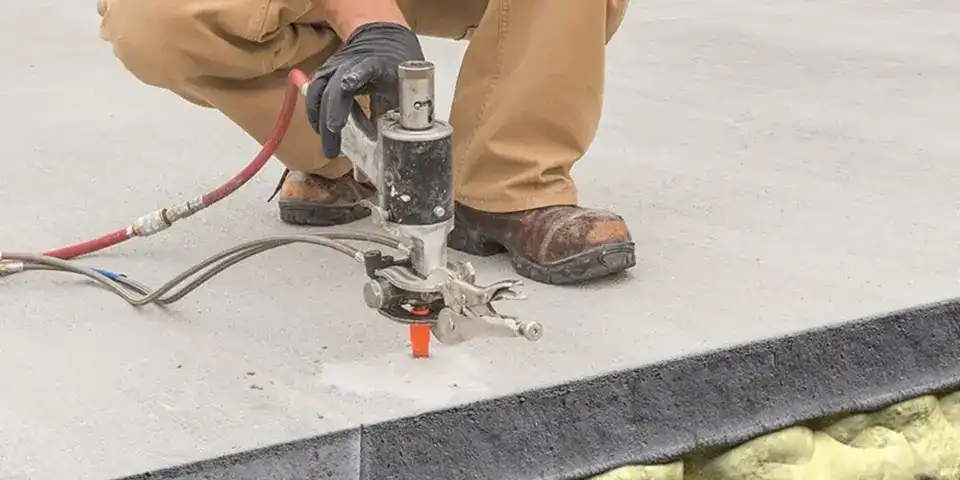
We complete the needed repairs using methods such as polyurethane foam slab lifting, slab jacking with grout, self leveling underlayment installation, joint rebuilding, or spall repair. We focus on correcting the floor efficiently while keeping adjacent areas clean and organized.
5. Final Review and Return to Service
After repairs cure, we check the finished surface, confirm the repair area is ready for traffic, and review the results with you. We also explain any follow-up recommendations for coatings, sealing, maintenance, or future phased repairs.
Why Choose Us for Warehouse Floor Leveling in Provo, UT
At Provo Concrete Lifting, we understand that warehouse floors are production surfaces, not just concrete slabs. Every dip, rough joint, and uneven section can affect safety, forklifts, drainage, and daily efficiency. That is why we approach Warehouse Floor Leveling Provo UT businesses need with a practical mindset built around performance, communication, and minimal downtime. We are a local, family-owned company with more than 15 years of experience, thousands of customers served, and the equipment needed to handle both targeted repairs and large commercial leveling scopes.
Commercial Concrete Repair Experience That Fits Warehouse Use
Warehouse floors face different demands than a typical driveway or patio. They carry repeated wheel loads, support racking, and need predictable flatness across travel lanes and work areas. We have experience with commercial concrete leveling, concrete settlement repair, trip hazard removal, and slab correction for demanding spaces across Southern Utah County & Central Utah.
That matters when you are dealing with a distribution center floor leveling project, a manufacturing plant floor issue, or an older warehouse slab in the Provo industrial park. We understand how floor defects affect movement, storage, safety, and scheduling. Our recommendations are based on how the floor is actually used, not on a one-size-fits-all repair method.
Licensed, Insured, and Committed to Safe Work Practices
Trust starts with accountability. We operate as a licensed and insured contractor for commercial concrete work in Utah and follow jobsite procedures designed to protect your team and ours. For warehouse environments, that includes attention to OSHA walking working surface requirements, PPE requirements for concrete grinding and cutting, and dust control practices for silica compliance.
Our crews are trained to work in active commercial settings where traffic control, clean work zones, and clear communication matter. We can coordinate around shipping schedules, forklift routes, tenant improvements, and phased occupancy needs. That helps reduce surprises and keeps the project more manageable for your operations staff.
The Right Equipment for Precise Leveling and Surface Correction
Successful industrial concrete floor leveling in Provo depends on matching the tool to the floor condition. We use industrial concrete grinders, scarifiers and scabblers, slab leveling pumps, polyurethane foam injection rigs, and mixing pumps for self leveling underlayment. For evaluation and quality control, we use laser levels, straightedges, moisture testing meters, and profile and flatness testing tools.
That range of equipment allows us to handle multiple repair conditions without overprescribing replacement. We can lift settled sections, grind high spots, rebuild failing joints, prep for overlays, and create a surface ready for future epoxy or polished concrete work. In many cases, this flexibility shortens the repair timeline and improves the finished result.
Local Knowledge of Provo and Utah County Warehouse Conditions
Local experience matters in commercial concrete repair. Warehouses in Provo, Orem, Springville, Mapleton, Spanish Fork, and along the I 15 corridor in Utah County can have different slab issues based on age, soil movement, drainage, freeze-thaw exposure, and past tenant use. Some floors need void filling and soil stabilization, while others need FF FL correction, joint rebuilding, or moisture mitigation before resurfacing.
Because we work throughout this region, we can spot common patterns quickly and recommend repairs that fit the building, not just the symptom. Whether the floor is in an older warehouse district near 84601 or part of a newer logistics build serving the Wasatch Front, we bring a local understanding that helps us plan smarter work.
Clear Communication, Honest Recommendations, and Lasting Value
Many warehouse owners do not need a sales pitch. They need a straight answer on what is failing, what can be repaired, and how soon traffic can return. We provide practical recommendations based on slab condition, use requirements, and budget priorities. If a problem area can be repaired in phases rather than shutting down the entire floor, we will tell you.
We also focus on long-term value. That may include adding semi rigid epoxy joint filler after edge repair, recommending dustproofing and hardener application in worn areas, or planning moisture mitigation systems before coatings. Our goal is to leave you with a floor that works better for your operation and a repair plan you can trust.
Warehouse Floor Leveling Backed by Proven Local Experience
We handle warehouse floor leveling projects for property owners, facility managers, contractors, and operations teams across Southern Utah County & Central Utah. Our work includes correcting uneven slabs, repairing damaged joints, restoring forklift travel lanes, and preparing floors for coatings, racking, and heavy daily use. If you are dealing with low spots, cracked concrete, surface wear, or floor flatness issues, we bring the tools and repair methods to solve the problem without pushing unnecessary replacement. Our team has completed work on residential, commercial, and industrial concrete, and that broad experience translates well to demanding warehouse environments.
Types of Warehouse Floor Projects We Handle
We work on a wide range of project types, including distribution center floor leveling, 3PL warehouse floor repairs, loading dock and staging area repairs, high bay storage warehouse floors, and spec warehouse tenant improvement floor prep. We also assist with production line and assembly area floor leveling, cross dock terminal floor repairs, and slab settlement repair in older warehouses.
Some customers need a narrow aisle warehouse floor leveling solution with tighter tolerances for specialized lift equipment. Others need broad repairs in staging zones, back-of-house retail spaces, or industrial shop floors where traffic has worn the slab unevenly over time. We tailor the repair scope to the building use, traffic volume, and budget.
Our Proven Methods for Leveling and Repair
Not every slab needs the same repair strategy. For settled concrete, we may use structural polyurethane foam for slab lifting or slab jacking with grout to restore elevation. For surface correction, we may use diamond grinding for flatness correction, shot blasting for coating prep, or self leveling underlayment placement with Portland cement based self leveling underlayment or cementitious underlayment.
When the floor also has damage at joints or cracks, we can pair leveling with crack chasing and epoxy injection, expansion joint rebuilding, spall repair and feather edge blending, or edge reconstruction with epoxy repair mortar and rapid set repair mortar. This allows us to deliver more complete repairs in one coordinated scope.
Complex Conditions We Are Equipped to Solve
Warehouse floors often fail in more than one way at once. We regularly see birdbaths, slope issues, pitted concrete, joint breakdown, sub-slab voids, and moisture-related coating failures. In these cases, we may combine thermal cameras for sub slab void detection, moisture testing, floor profiling, and sectional repairs to isolate the actual cause before work begins.
We can also address cold storage and freezer floor repair challenges, floor re-sloping and drainage correction near loading zones, and floor preparation for future epoxy or polyaspartic systems. These more technical projects require careful staging, material selection, and return-to-service planning, especially in facilities that cannot afford long shutdowns.
Results You Can Expect From Our Work
Customers call us because they need a floor that performs better in real conditions. Our warehouse slab leveling work is designed to improve ride quality for forklifts and pallet jacks, reduce trip hazards, limit standing water, and support safer daily movement through the building. We also help create a more suitable base for polished concrete, coatings, equipment anchoring, and racking installation.
When appropriate, we can discuss floor flatness and levelness testing, corrective grinding, and phased repairs to meet project goals. For many clients, the biggest benefit is avoiding a full tear-out while still getting a floor that is more functional, easier to maintain, and better suited to long-term warehouse use. That is the value of Warehouse Floor Leveling Provo UT businesses can depend on.
Our Services
- Mudjacking
- Foam Concrete Leveling
- Void Filling & Soil Stabilization
- Concrete Crack Sealing
- Concrete Joint Sealing
- Concrete Surface Sealing
- Trip Hazard Inspections
- Trip Hazard Removal
- Driveway Leveling
- Sidewalk Leveling
- Patio Leveling
- Garage Floor Leveling
- Porch Leveling
- Pool Deck Leveling
- Basement Floor Leveling
- Concrete Steps Leveling
- Foundation Slab Leveling
- Shed Slab Leveling
- Barn Floor Leveling
- Commercial Concrete Leveling
- Industrial Concrete Leveling
- Warehouse Floor Leveling
- Loading Dock Leveling
- Shop Floor Leveling
- Concrete Settlement Repair
- HOA & Community Concrete Repairs
- Apartment Concrete Repair
- Municipal Sidewalk Repair
Frequently Asked Questions
What causes uneven and out of level warehouse floors in Provo UT?
Uneven warehouse floors usually come from slab settlement, soil movement, poor compaction, drainage problems, heavy point loads, joint breakdown, or years of forklift traffic. In Provo and Utah County, freeze-thaw cycles and moisture changes can also contribute to movement under the slab. We inspect the concrete surface and supporting conditions to find out whether the problem is low spots, voids, surface wear, or structural settlement so the repair method matches the real cause.
How is warehouse floor leveling done without shutting down operations?
In many facilities, we can phase the work by aisle, dock area, or traffic zone instead of closing the whole building. We often schedule repairs at night, on weekends, or during slower operating windows. Sectional repairs, fast-curing materials, and careful staging help limit disruption. Before work starts, we review access routes, forklift patterns, and safety controls so your team can keep as much of the warehouse operational as possible during the project.
Can you level a warehouse floor that has active forklift traffic?
Yes. Active forklift traffic is one of the main reasons owners call us for warehouse floor repair. We select repair methods and materials based on the load demands of the area, whether that means grinding high spots, filling low areas, rebuilding joints, or lifting settled slab sections. We also help plan the work around travel lanes and staging needs so the repaired floor is better suited for repeated wheel traffic and daily warehouse use.
How do you repair dips, birdbaths, and low spots in a warehouse slab?
It depends on why the low area formed. If the slab has settled, concrete lifting with grout or polyurethane foam may restore elevation. If the concrete is structurally sound but has surface depressions, we may use grinding to blend transitions or install a cementitious leveling material to fill the low spot. We first measure the floor with lasers and straightedges so we can choose the most efficient way to correct dips, birdbaths, and uneven travel paths.
What is the difference between grinding and self leveling for warehouse floors?
Grinding removes high spots and improves transitions by cutting the concrete down. Self leveling adds material to fill low areas and create a more uniform surface. The right option depends on floor condition, required tolerances, and the thickness needed for correction. In some Provo warehouse projects, we combine both methods. We may grind ridges or curled joints first, then use a self leveling underlayment where deeper low spots need to be filled.
How long does warehouse floor leveling take in Utah County?
Timing depends on the square footage, severity of the floor issues, material choice, and how much of the warehouse must stay active. A targeted repair in one section may take a day, while larger phased projects can take several days or longer. Fast-set repair mortars and organized scheduling can shorten downtime. After we inspect the floor, we provide a realistic timeline based on prep, leveling, curing, and return-to-service requirements.
Can my warehouse floor be leveled to meet FF FL requirements?
In many cases, yes, but it depends on the starting condition of the slab and the tolerance you need. We can evaluate floor flatness and levelness concerns, especially in narrow aisle and high-bay environments where tighter tolerances matter. Some floors need corrective grinding, some need localized filling, and some need a combination approach. If your project calls for FF FL compliant warehouse floor leveling in Utah County, we can discuss testing, correction options, and realistic achievable results.
Can you repair cracks and joints at the same time as leveling?
Yes. In fact, combining these repairs is often the most practical approach. If we level a floor but leave failing joints, spalled edges, or active cracks untreated, the floor can still perform poorly under traffic. We commonly pair leveling with crack repair, joint rebuilding, semi-rigid filler installation, and patching of damaged slab edges. This helps create a smoother, stronger surface that holds up better under forklifts and pallet jacks.
How do you keep dust under control during warehouse floor grinding?
We use dust-controlled grinding equipment with industrial vacuums and HEPA filtration to capture concrete dust at the source. We also isolate work zones when needed and follow silica exposure control practices required for commercial concrete work. Dust management is especially important in active warehouses, food-related facilities, and spaces with inventory nearby. During the estimate, we review dust control needs, access restrictions, and any housekeeping or containment requirements specific to your building.
How soon can forklifts and pallet jacks drive on the repaired floor?
Return-to-service timing depends on the repair method and materials used. Some fast-track mortars and fillers allow traffic sooner than traditional products, while deeper leveling applications may require a longer cure. We plan the project around your operational needs and explain when foot traffic, pallet jacks, and forklifts can safely return. For many warehouse floor leveling jobs in Provo Utah, we can sequence repairs so only specific sections stay offline at a time.